
The Cup and the Garden
Palm Sunday—with all its fanfare and tension—feels both like yesterday and a lifetime ago. Can such a dichotomy of feeling and perception be possible? I wonder if Jesus and his disciples felt the same.
On Thursday evening, he celebrates the traditional Passover meal with his disciples, taking symbols that are ingrained in the fabric of his people and giving them new meaning. In a Passover meal, there would be four cups of wine, each representing promises given by God to the Hebrew people in Exodus 6:6-8. Four expressions of redemption:
“I will bring you out…”
“I will deliver you…”
“I will redeem you…”
“I will take you…”
The cup represents the agreement and belief in the covenant promises that God is speaking over the people of Israel. His redemption is not just physical freedom for the Jewish people, but the relationship as His partners to bring His name to all the world. During this meal, Jesus brings in a new meaning…”Drink of it, all of you, for this is my blood of the covenant, which is poured out for many for the forgiveness of sins.” Matthew 26: 27-28 Covenant talk and redemption talk that is grounded in what they already know from their Scriptures, but this is different…this is fulfillment, but perhaps not in the way they expected.
The cup doesn’t stay at the table. It follows Jesus into the garden.
But let’s talk a moment about the other symbolic meaning of the cup. In Hebrew Scriptures, the cup is often used to talk about God’s wrath. (Ps 60:3, Ps 75:8, Isa 51:17, etc). The other side of this symbol is focused on when Jesus moves with his disciples to the Garden of Gethsemane where he pleads with God to take the cup away from him. “My Father, if it be possible, let this cup pass from me…” Matthew 26:39
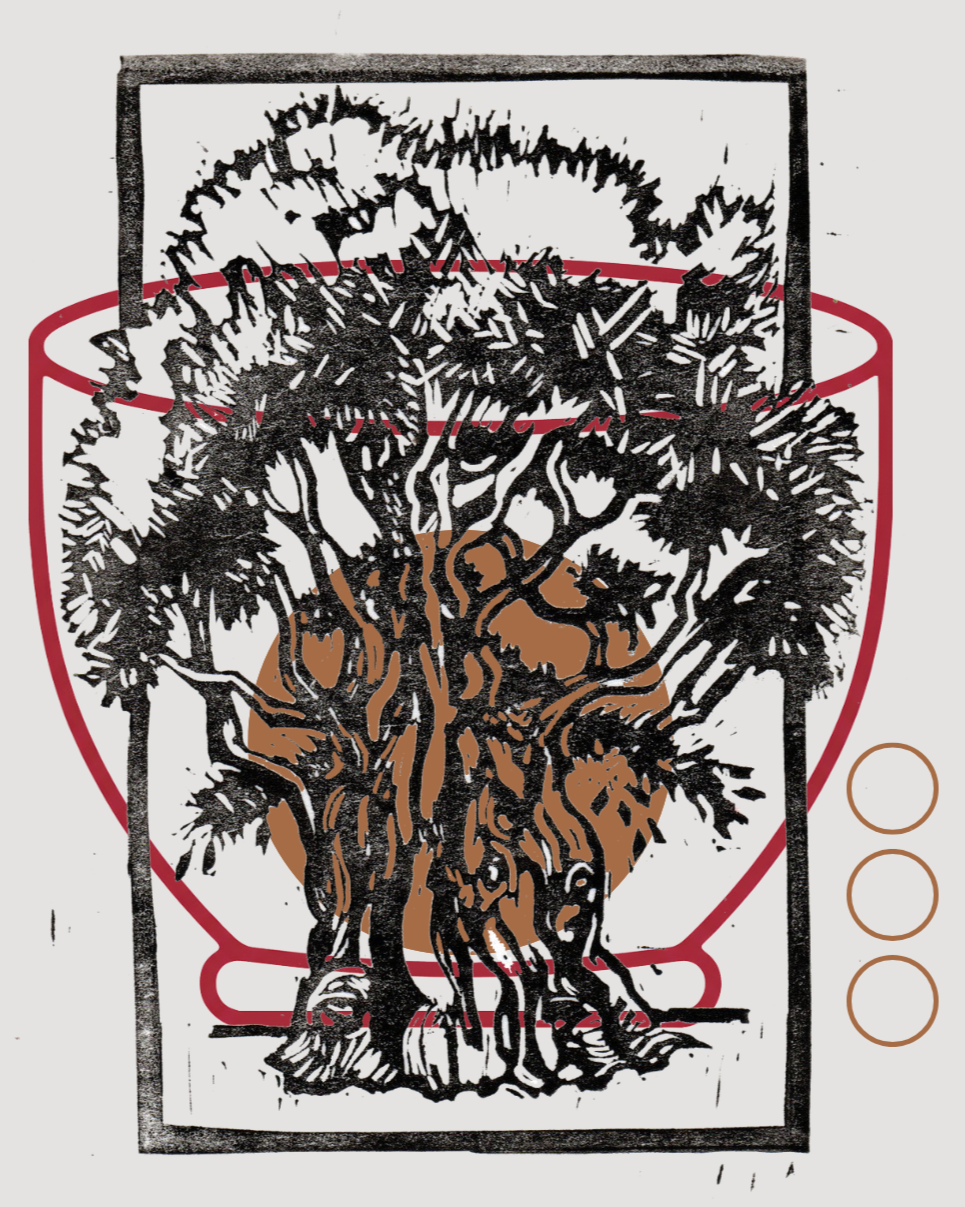
The cup in the garden as a symbol of God’s cup of wrath as well as his promised redemption leads to the next symbol of the Good Friday. The olive tree. The Garden of Gethsamene is an olive grove outside of Jerusalem and the trees are ancient and whisper to us about a tree from even more ancient times. In a different garden. A tree that would be the fall of mankind. Both of these trees represent a decision that must be made to either trust God or trust ourselves. The whole story is about desire and if we will yield it to God or not. In the Garden of Eden, Adam and Eve chose to trust their own discernment. In the Garden of Gethsamene, Jesus must wrestle with the same human question of who he will trust.
Jesus’s prayer in the garden is raw and honest with his emotions and behavior revealing the inner conflict he must win on our behalf. He knows what needs to happen and what it will cost him. Knowing and doing are often worlds apart.
I know the right thing—and still, I fail to do it. But that’s not what happens for Jesus in the Garden.
What if in our deepest, darkest moments of internal warfare, we flung ourselves at the Father like Jesus did? In Scripture, trees are often representative of life and vitality. They are often found alongside key Biblical figures that have profound choices to make that will either lead to deeper life with God or rebellion and death.In a deeply ironic way, and in keeping with the dual nature of so many biblical symbols, the olive tree becomes a symbol of redemption and life—brought through submission to condemnation and death by the only One who never deserved it.
It can be difficult for us to hold the tension that is found in symbols that carry opposite meanings, but these dual-natured symbols help us hold tighter to a God who perfectly holds in tension things that ought not go together:
All-powerful, yet fully surrendered
Just, yet overflowing with mercy
God and man
King and servant
Sovereign, yet inviting us into partnership
May these both/ands of our gracious God bring you to your knees in your own both/and of utter joy and peace at His redemption alongside deep grief and gratitude for the cost.